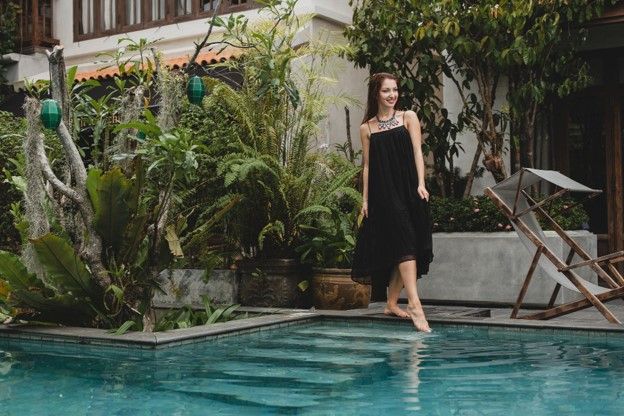
A villa isn’t just a larger house. The scale changes the whole design brief, from how a room handles heat and airflow to how far a line of sight can travel before it hits a pool or a garden wall. Villa interior design pulls together architecture, climate, and craftsmanship into one continuous environment, indoors and out. Here’s what actually goes into it, and how to find someone capable of pulling it off.
What Actually Counts as a Villa?
A villa is a standalone property set on its own plot, usually one or two storeys, with private outdoor space attached. In Phuket and Koh Samui, that generally means a walled compound with a private pool, a covered outdoor living area, and gardens wrapping around the main structure. Layouts vary widely, from a compact two-bedroom holiday home to a sprawling five-bedroom estate with staff quarters and a separate guest pavilion.
What Sets Villa Interior Design Apart
A typical villa might include a formal living area, a private family wing, guest quarters, and an outdoor pavilion, each needing its own character while still feeling part of the same home. Ceilings run higher. And in a tropical climate, humidity, salt air and strong sun all require materials that could withstand environmental exposure.
The Core Elements Worth Getting Right
Good villa interior design comes down to a handful of things to be done properly:
Zoning and flow: Each area needs a clear purpose, and movement between them should feel natural. A living room that opens straight onto a terrace works far better than one separated by a narrow corridor.
Material selection for the climate: Sealed teak, treated rattan, powder-coated metal, and UV-stable fabrics hold up well through wet and dry seasons.
Scale and proportion: Furniture sized for a standard living room disappears in a villa’s open-plan spaces. Pieces need enough presence to hold their own without crowding the room.
Layered lighting: Ambient, task and accent lighting working together, rather than one central fixture doing all the work, changes how a space feels after dark almost as much as the furniture does.
Indoor-outdoor continuity: Matching flooring, aligned sightlines and furniture all help a villa feel bigger than its floor plan suggests.
How to Find the Right Interior Designer for a Villa Project
Ask to see completed villa work specifically, not just residential portfolios in general. Villa-scale, multiple-zone, and outdoor integration present different problems than a single city flat, and the portfolio should show that.
Check for genuine experience with local climate and materials. Someone who’s worked in tropical climates will know why jute fails in humidity or why sealed teak matters more than the finish colour.
Ask how the process actually works, from concept through to installation. A designer managing sourcing, production and delivery under one roof tends to move faster and hit fewer snags than a project split across separate suppliers.
Get a sense of their project management, not just their design sensibility. Timelines, communication and how they handle delays matter just as much as the mood board.
Firms like Oriental Living, working across villa interior design projects in Phuket and Koh Samui, are a useful benchmark for what a coordinated, climate-aware process looks like in practice if you want a sense of the standard and quality.